Light: glass wins, but not by much
Glass is the clearest glazing there is. YourGreenhouses quotes up to 95% light transmission for the tempered glass of its Scandiglas. Clear single-layer polycarbonate comes close: Canopia lists over 90% for the 0.8 mm panels of the Snap & Grow. Twin-wall polycarbonate lets through a little less and diffuses it: 82% for Palram's 4 mm twin-wall and 79% for the 10 mm panels of the Glory, per the dealer's spec tables.
Diffused light is not a bad thing. It spreads evenly, reaches lower leaves and doesn't scorch seedlings on a bright May afternoon. Many growers prefer it.
Insulation: twin-wall polycarbonate wins clearly
This is the big one. A single pane of glass, or a single 0.8 mm polycarbonate sheet, loses heat quickly on a clear night. Twin-wall polycarbonate has two skins with an air gap between them, and that gap slows heat loss a lot; thicker gaps slow it more. That is why panels carry 20% of our score, and why the 10 mm twin-wall Glory tops our winter ranking while the glass Scandiglas sits lower.
If you want to grow through winter or keep tender plants frost-free with a small heater, twin-wall polycarbonate will cost you less to heat.
Twin-wall or single-layer polycarbonate?
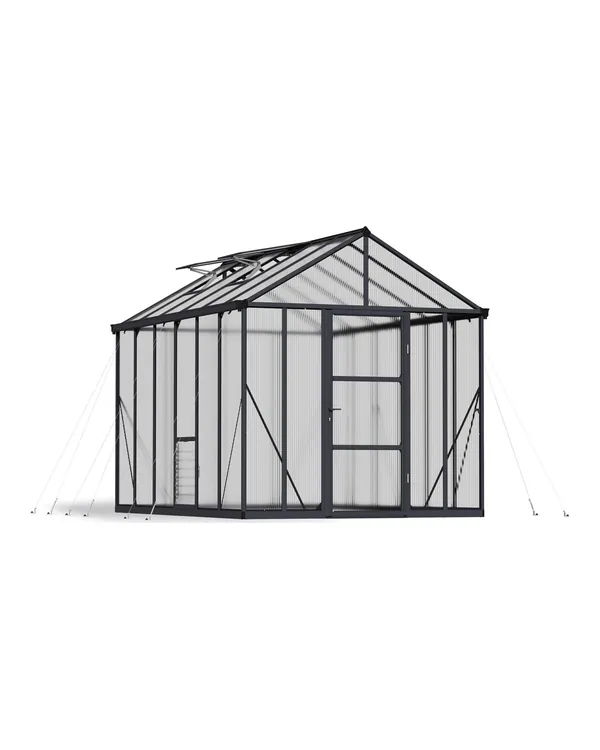
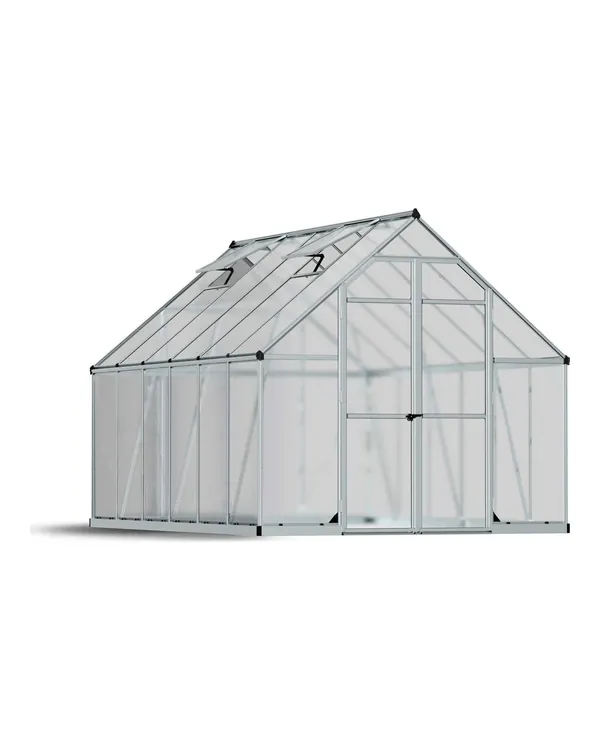
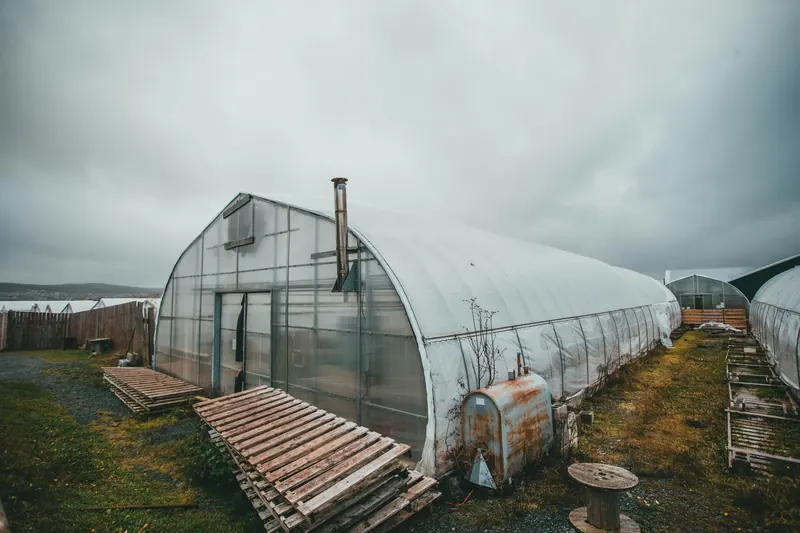
Not all polycarbonate is equal, and this choice matters almost as much as glass versus plastic. Single-layer clear panels, like the 0.8 mm sheets on the Snap & Grow and the walls of the Hybrid and Balance, look almost like glass and let in the most light, but insulate little. Twin-wall panels have two skins and an air gap, from 4 mm (Palram Essence, Mythos, most Outsunny) to 6 mm (YourGreenhouses, Bloomcabin, Rion walls) and 10 mm (Glory). They diffuse the light and hold heat much better. Some kits mix the two: a twin-wall roof to tame the summer sun and clear walls for the view. That is a nice compromise for spring-to-fall growing, less so for winter.
Strength and safety
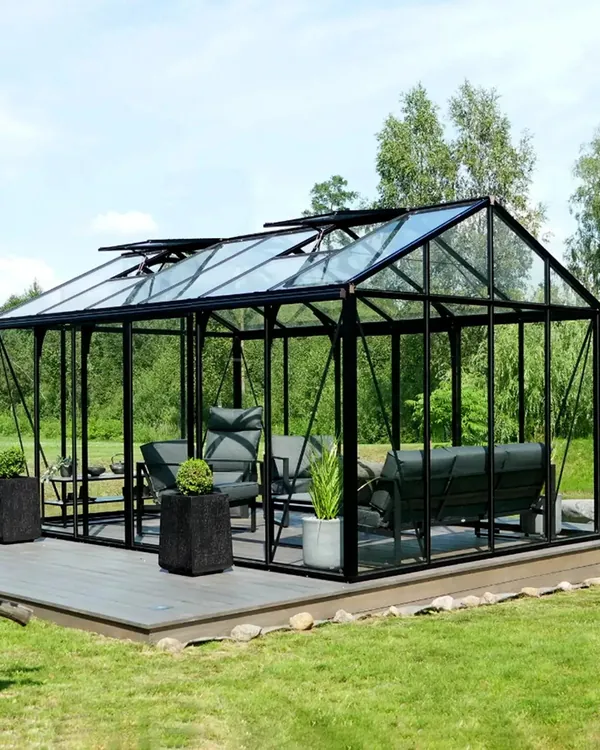
Polycarbonate doesn't shatter, which matters with kids, dogs and a stray ball in the yard. Glass in modern kits is tempered safety glass (YourGreenhouses calls the Scandiglas glass "7x stronger" than standard panes), and if it does break it crumbles into small pieces rather than shards. Structurally, glass kits need a stiffer frame, and the Scandiglas carries the highest wind rating on our list at 115 mph. On snow, the steel polycarbonate tunnels publish the biggest numbers: 38 psf for the Arrow.
Price per square foot
The gap is wide. On November 12, 2026, the glass Scandiglas was $6,999 for 97 sq ft, about $72 per square foot, and that was a Black Friday price. The twin-wall Palram Essence, same size class, was $1,899, about $20 per square foot. Even the premium 10 mm Glory came in at about $45. For the price of one glass greenhouse, you could buy three good polycarbonate ones.
Looks and lifespan
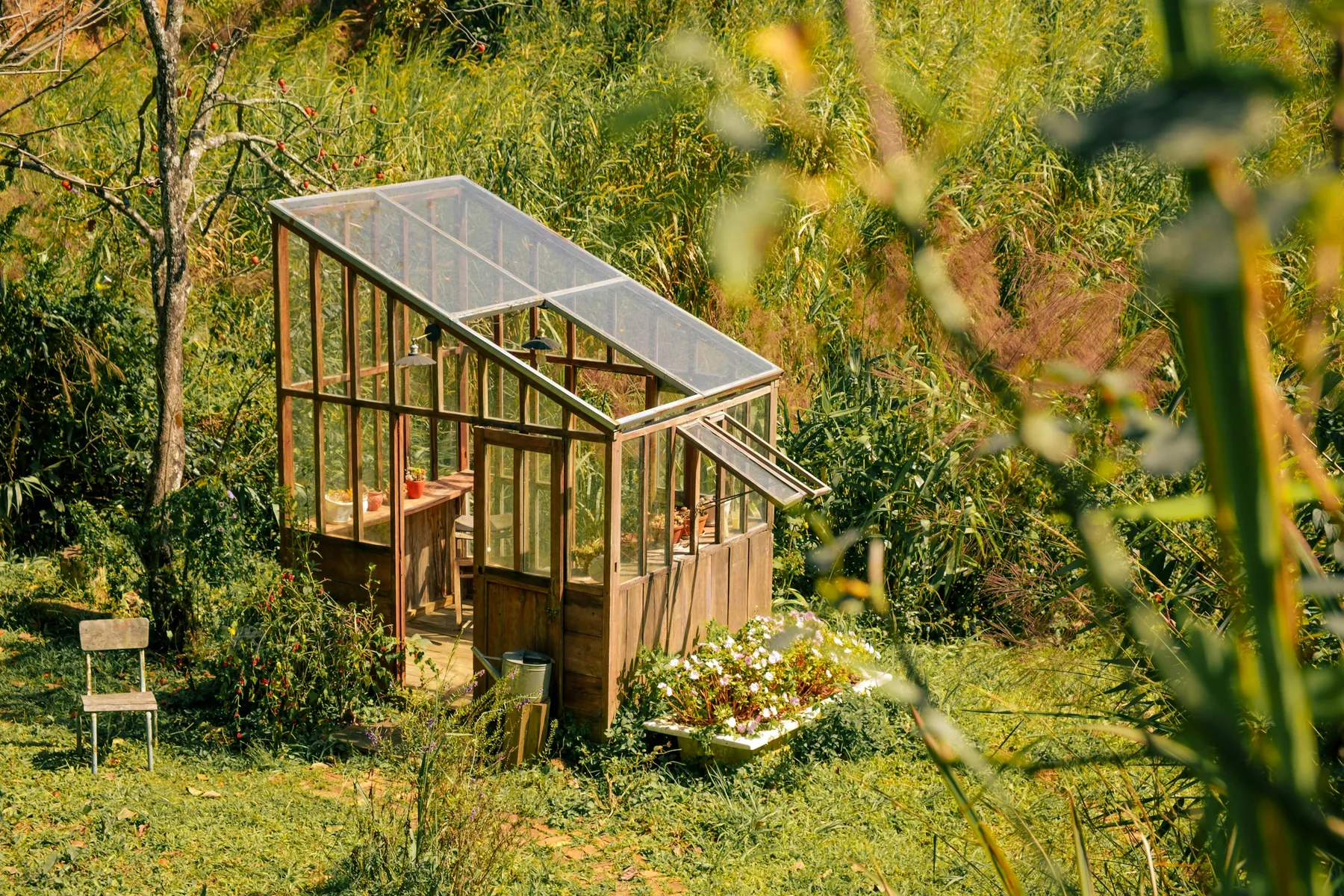
Glass wins on looks, and it never yellows. A glass greenhouse is a garden room you sit in with a coffee. Polycarbonate panels are UV-protected (YourGreenhouses says its panels block 99% of UV) and come with panel warranties of 5 to 10 years on our list, but over many years they can lose some clarity. If you want a structure for the next twenty years and love the look, glass is a fair choice.
Care and cleaning
Both need a wash once or twice a year to keep the light coming in. Use plain water and a soft brush on polycarbonate; abrasive pads and harsh solvents scratch it and can damage the UV layer. Glass is tougher to scratch but heavier to replace if a pane breaks; tempered panes have to be ordered to size. Polycarbonate twin-wall sheets can collect a little condensation inside the flutes over time, which is normal. Keep gutters clear on either type, and check seals and clips each fall before the first storm.
Which glazing for your climate
Cold winters with snow: twin-wall polycarbonate, ideally 6 mm or thicker, on a frame with a published snow load. The steel tunnels from YourGreenhouses publish 32 to 38 psf with 6 mm panels, and the Palram Glory pairs 10 mm panels with a 20 lb/ft² rating. Mild, grey winters: light is the scarce thing, so glass or a clear twin-wall panel both work; glass gives a little more light, twin-wall keeps more heat. Hot, sunny summers: the diffused light of twin-wall polycarbonate spreads sun more evenly and scorches less, and you will want shade cloth either way. Windy, exposed yards: polycarbonate is the safer material, but wind is mostly about the frame and the anchoring; the glass Scandiglas publishes 115 mph, the highest wind rating on our list.
In short, climate decides the panel thickness first, and glass versus polycarbonate second.
Our verdict
Choose twin-wall polycarbonate if you want to grow most of the year, keep heating costs down and get the most space for your money. The Essence ($1,899), the Glory ($4,349) and the YourGreenhouses tunnels ($2,765 to $2,810) are the ones we would look at first.
Choose glass if light and looks matter most and the budget allows. The Scandiglas, with its 115 mph rating and 12-year structural warranty, is the one on our list.
And if you want the light of glass for less, the clear-walled Palram Hybrid is a nice middle path: twin-wall roof, crystal-clear walls, $899.
The kits in this guide, side by side
| Greenhouse | Palram Glory 8x129.5/10 | YourGreenhouses Scandiglas8.5/10 | Palram Essence 8x129.0/10 |
|---|---|---|---|
| Price | $4,349 | $6,999 | $1,899 |
| Size | 8' x 12' · 95.6 sq ft | 7'9" x 12'7" · 97 sq ft | 8' x 12' · 95.4 sq ft |
| Price per sq ft | $45.49/sq ft | $72.15/sq ft | $19.91/sq ft |
| Panels | 10 mm polycarbonate | Tempered glass | 4 mm polycarbonate |
| Snow load | 20 lb/ft² | Not stated | 15 lb/ft² |
| Wind rating | 60 mph | 115 mph | 56 mph |
| Peak height | 8'10" peak | 7'8" peak | 7'7" peak |
| Warranty | 10-year | 12-year | 5-year |
| Buy | See price | See price | See price |